
About Wanaprathy

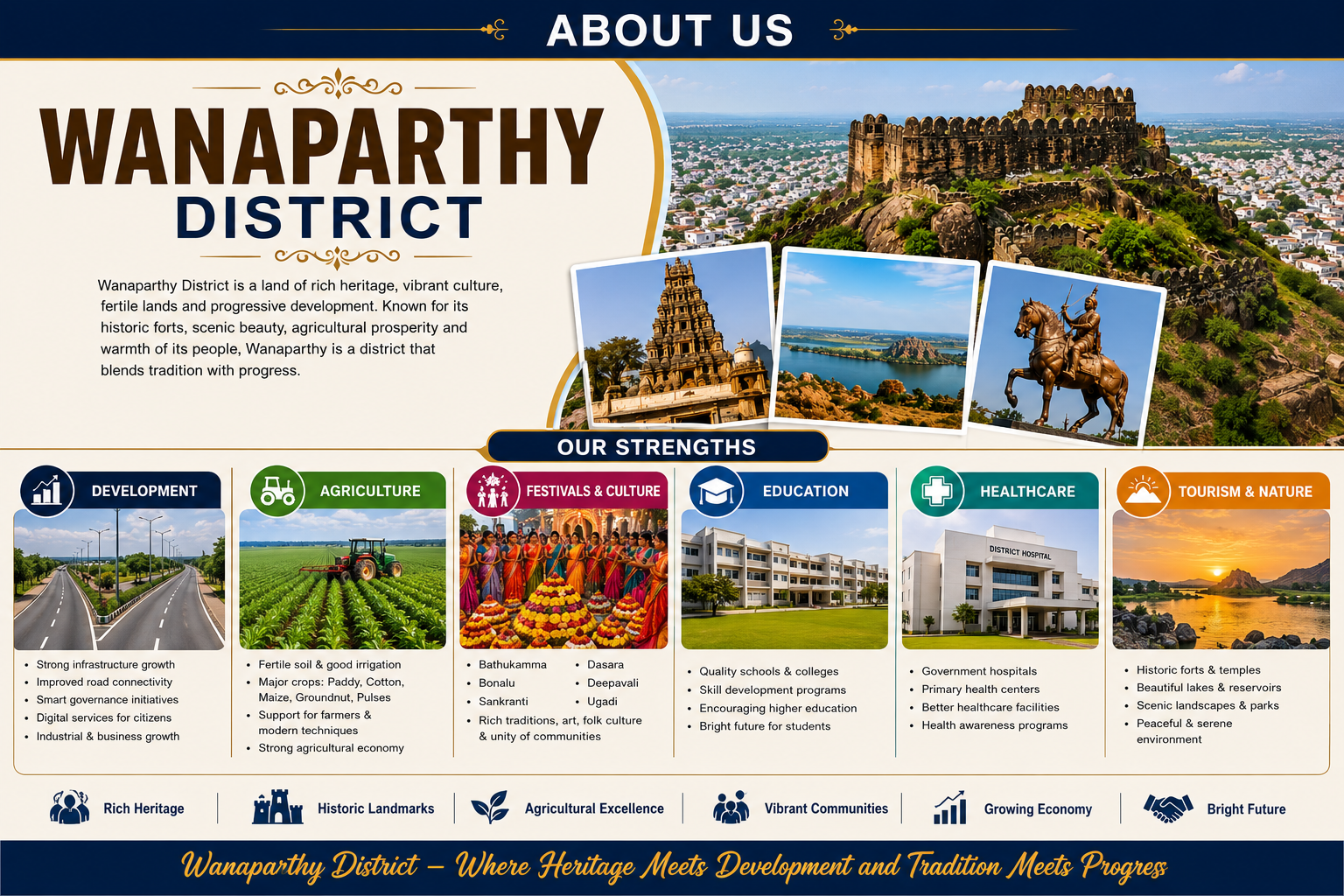
Wanaparthy District is one of the prominent districts of Telangana State, located in the southern part of the state. Known for its rich history, vibrant culture, agricultural prosperity, and rapid development, Wanaparthy has emerged as an important center for tourism, education, and economic growth. The district headquarters is situated in Wanaparthy town, which serves as the administrative, commercial, and cultural hub of the region.
The district is blessed with a unique combination of historical significance, fertile agricultural lands, scenic landscapes, and a strong cultural identity. Once part of the renowned Wanaparthy Samsthanam, the area has a proud legacy that dates back several centuries. Historical forts, palaces, temples, and monuments stand as reminders of its royal heritage and architectural excellence.
Agriculture forms the backbone of Wanaparthy’s economy and plays a vital role in the livelihood of a large portion of the population. The district’s fertile soil and expanding irrigation facilities support the cultivation of major crops such as paddy, cotton, maize, groundnut, pulses, and various horticultural crops. Government initiatives, modern farming techniques, and irrigation projects have significantly contributed to agricultural productivity and rural development.
Wanaparthy is also known for its rich cultural traditions and vibrant festivals. Celebrations such as Bathukamma, Bonalu, Sankranti, Ugadi, Dasara, and Deepavali bring communities together and showcase the district’s colorful customs, folk arts, music, and traditional values. These festivals reflect the deep-rooted cultural heritage and unity among the people of the region.
Over the years, the district has witnessed substantial growth in infrastructure and public services. Improved road connectivity, educational institutions, healthcare facilities, digital governance initiatives, and rural development programs have enhanced the quality of life for residents. Investments in transportation, irrigation, and public welfare projects continue to support the district’s progress and modernization.
Tourism is another important aspect of Wanaparthy’s identity. Visitors are attracted to its historic palaces, ancient temples, beautiful reservoirs, and picturesque natural surroundings. Popular destinations such as Wanaparthy Palace, Srirangapur Temple, Koilsagar Project, and several heritage sites offer opportunities to explore the district’s historical and cultural richness.
Why Wanaparthy Stands Out
- Rich historical and cultural heritage
- Strong agricultural economy
- Growing infrastructure and connectivity
- Renowned temples and tourist attractions
- Vibrant festivals and traditions
- Expanding educational opportunities
- Improving healthcare services
- Commitment to sustainable development
Overview Of Wanaprathy
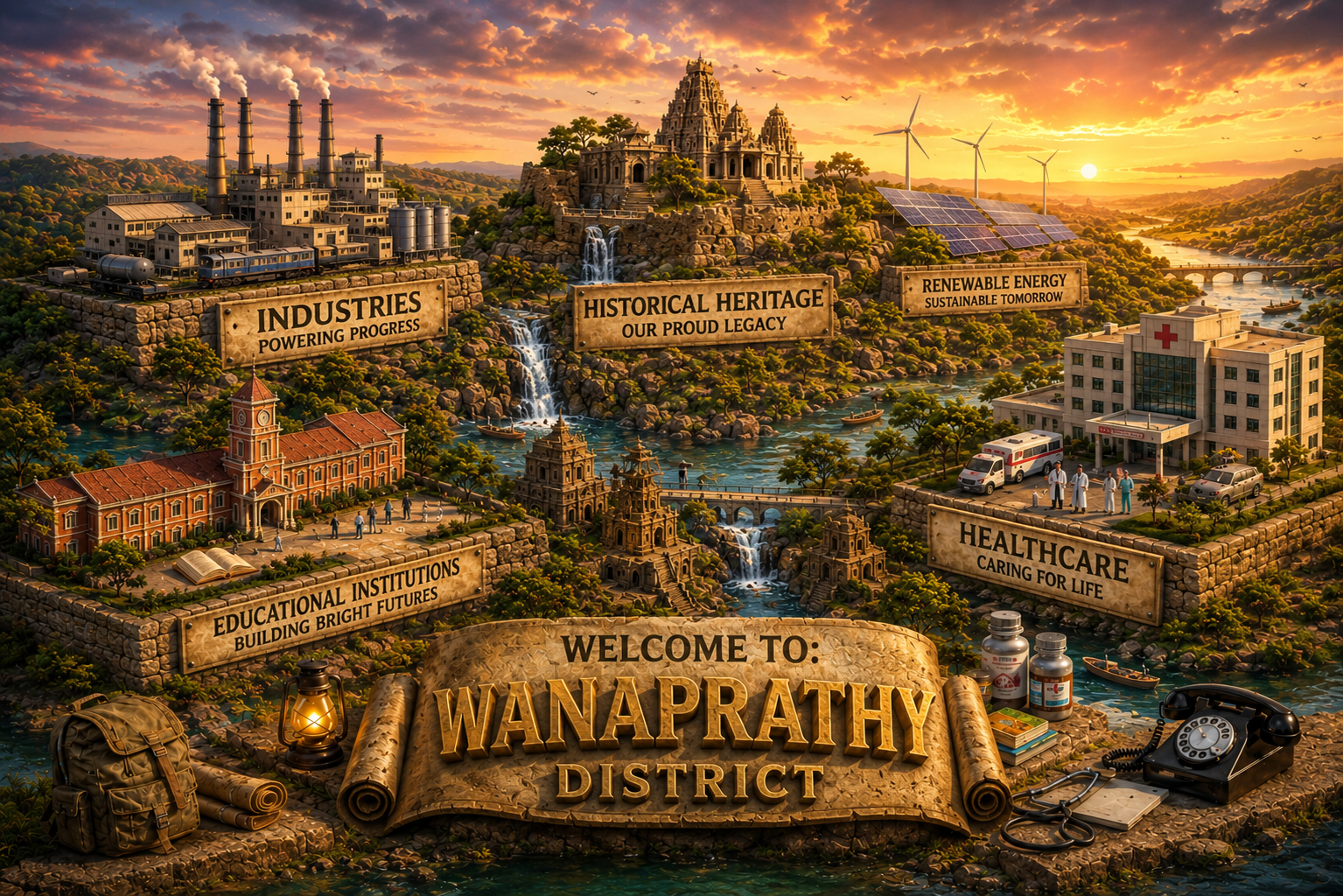
Wanaparthy District, located in the southwestern part of Telangana, is a region that beautifully combines historical significance, cultural heritage, natural beauty, and modern development. Known for its rich legacy as the former Wanaparthy Samsthanam, the district has played an important role in the history and culture of the region. The historic palaces, temples, and traditional architecture reflect the glorious past of Wanaparthy while preserving the values and traditions of Telangana. Surrounded by scenic landscapes, reservoirs, and agricultural fields, the district offers a peaceful environment that supports both economic growth and community well-being.
Agriculture forms the backbone of Wanaparthy’s economy, providing livelihoods to a large portion of the population. Fertile lands and irrigation facilities support the cultivation of crops such as paddy, cotton, maize, groundnut, and pulses. Alongside agriculture, the district is witnessing steady industrial growth through agro-based industries, small-scale manufacturing units, and emerging business opportunities that contribute to employment generation and economic progress. The development of roads, transportation networks, and public infrastructure has further strengthened connectivity and facilitated regional growth. Education has become a key pillar of development in Wanaparthy, with numerous schools, colleges, and professional institutions nurturing the talents and aspirations of young people.
Geography & location
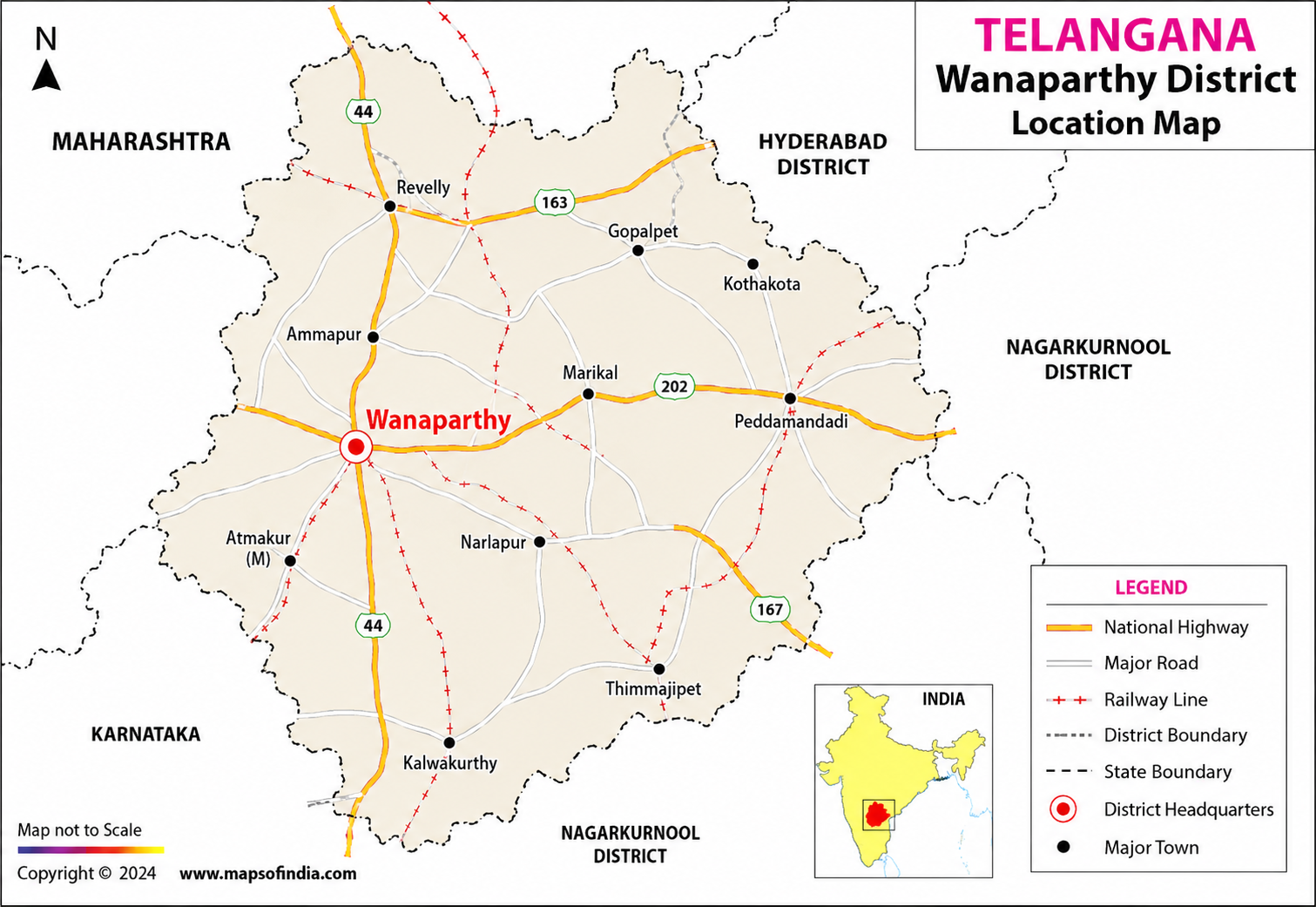
Wanaparthy District is one of the 33 districts of Telangana State, located in the south-central part of India. Established as a separate district during the administrative reorganization of Telangana in 2016, Wanaparthy has emerged as an important center for agriculture, education, healthcare, and regional development. The district headquarters, Wanaparthy town, serves as the administrative, commercial, and cultural hub of the region. Strategically positioned within Telangana, the district enjoys good connectivity through a network of national highways, state highways, and regional roads that link it to major cities such as Hyderabad, Mahabubnagar, Kurnool, and other neighboring urban centers.
The geographical location of Wanaparthy District plays a significant role in its economic and social development. The district is surrounded by neighboring districts including Mahabubnagar to the north, Nagarkurnool to the east, and Jogulamba Gadwal to the west, while the southern region lies close to the border areas connecting Telangana with the states of Andhra Pradesh and Karnataka. This advantageous location facilitates trade, transportation, and cultural exchange between different regions. The district’s transportation network includes well-developed road infrastructure, connecting villages, mandals, and towns to major markets and service centers across Telangana. Wanaparthy District covers a landscape characterized by fertile agricultural plains, rocky terrains, small hillocks, forests, and water bodies.
Heritage & culture
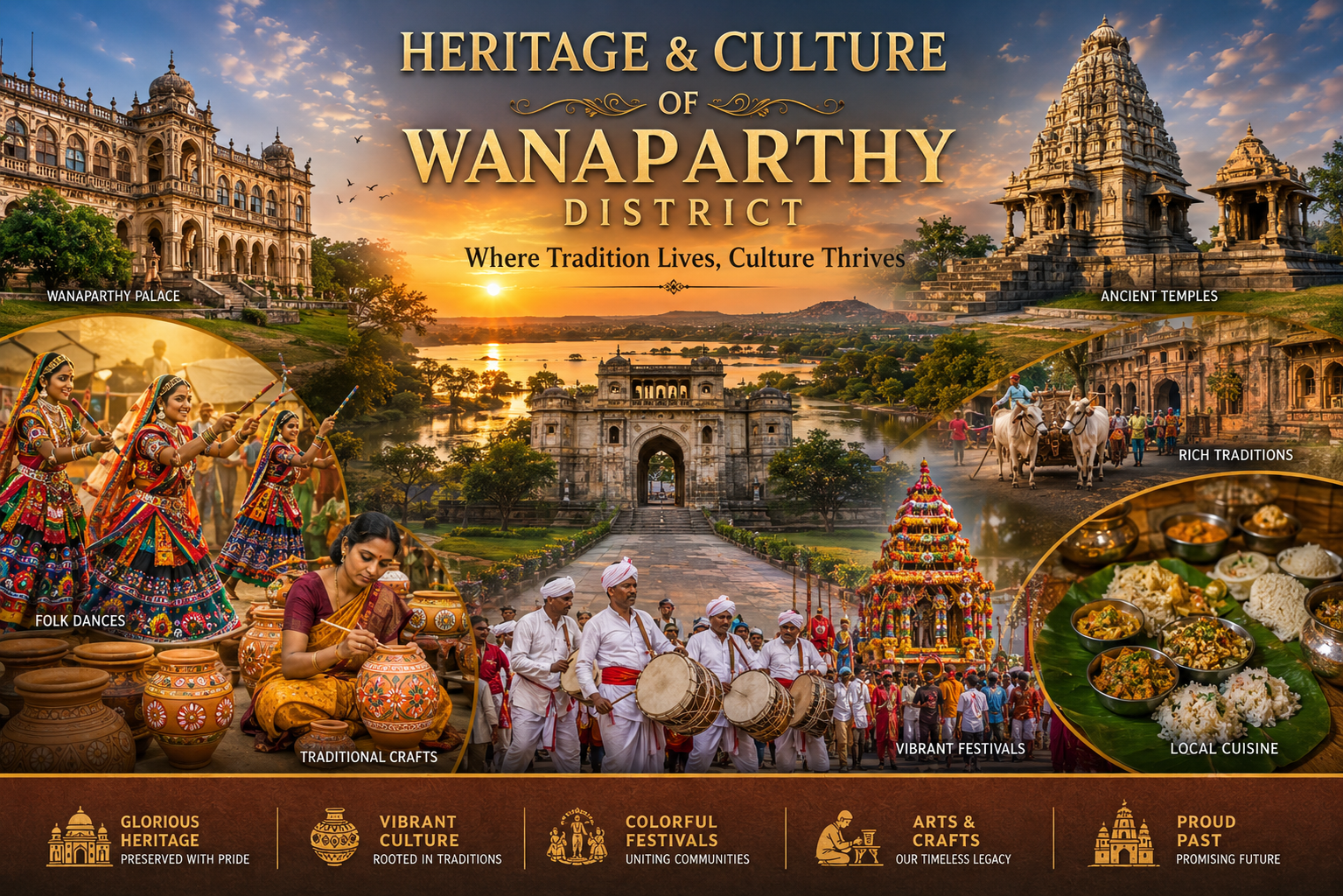
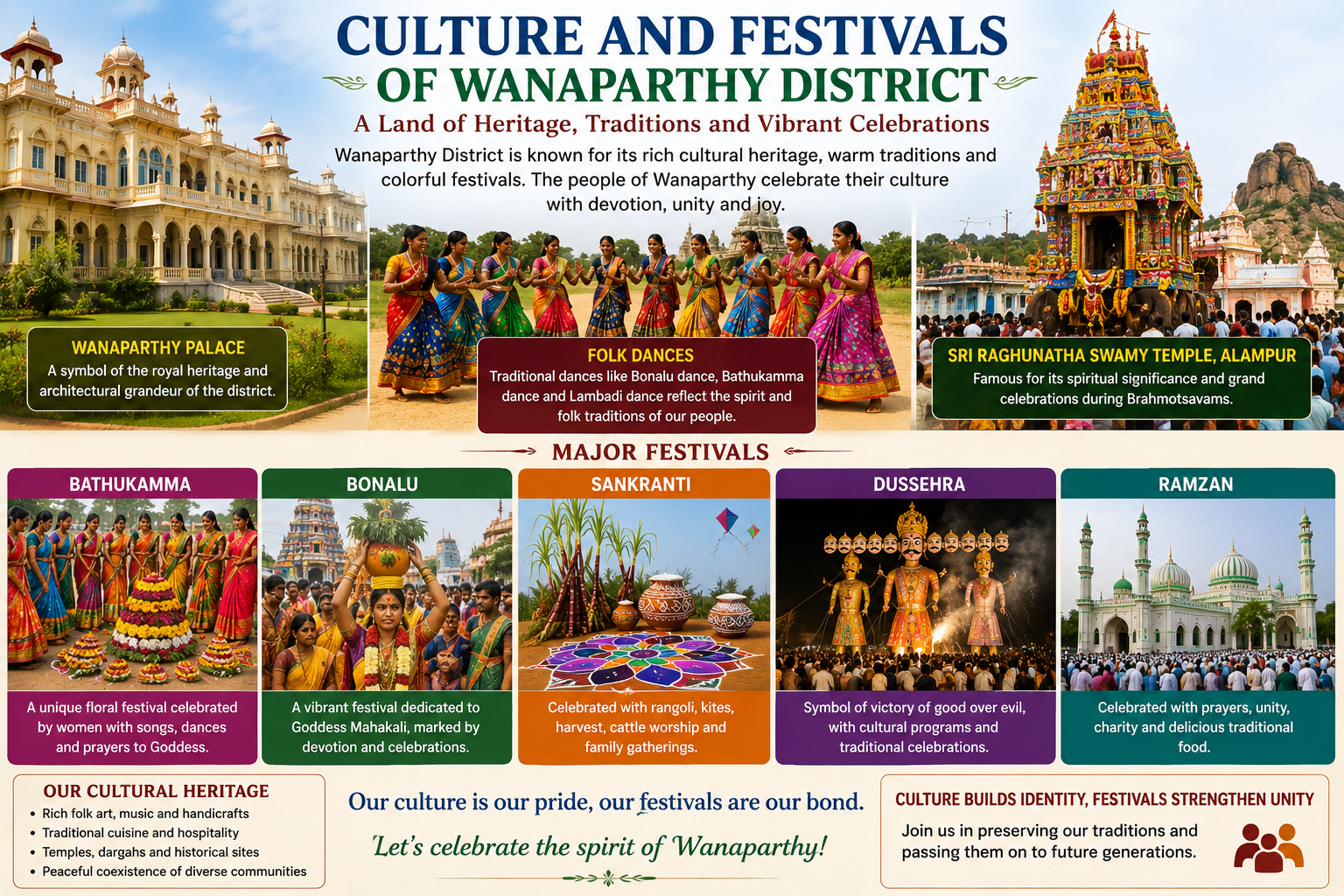
Wanaparthy District stands as a remarkable symbol of Telangana’s rich historical legacy, vibrant traditions, and enduring cultural values. The district’s heritage is deeply rooted in the history of the Wanaparthy Samsthanam, one of the most prominent princely estates of the former Hyderabad State. For centuries, Wanaparthy has been a center of cultural development, social progress, and architectural excellence, leaving behind a legacy that continues to inspire generations. The magnificent Wanaparthy Palace, historic temples, ancient structures, and traditional settlements reflect the grandeur of a bygone era while preserving the unique identity of the region. These historical landmarks serve not only as architectural treasures but also as living reminders of the district’s glorious past and its contribution to the cultural fabric of Telangana. The culture of Wanaparthy is a vibrant blend of traditions, customs, festivals, folklore, and artistic expressions that have been nurtured and passed down through generations. The people of the district take immense pride in their cultural heritage, celebrating festivals with great enthusiasm and communal harmony. Traditional festivals such as Bathukamma, Bonalu, Sankranti, Dasara, Deepavali, Ram Navami, and Ugadi bring communities together in colorful celebrations filled with devotion, music, dance, and cultural performances. These festivals showcase the spirit of unity and reflect the strong social bonds that define the district’s cultural landscape.
Agriculture-The backbone of Wanaprathy
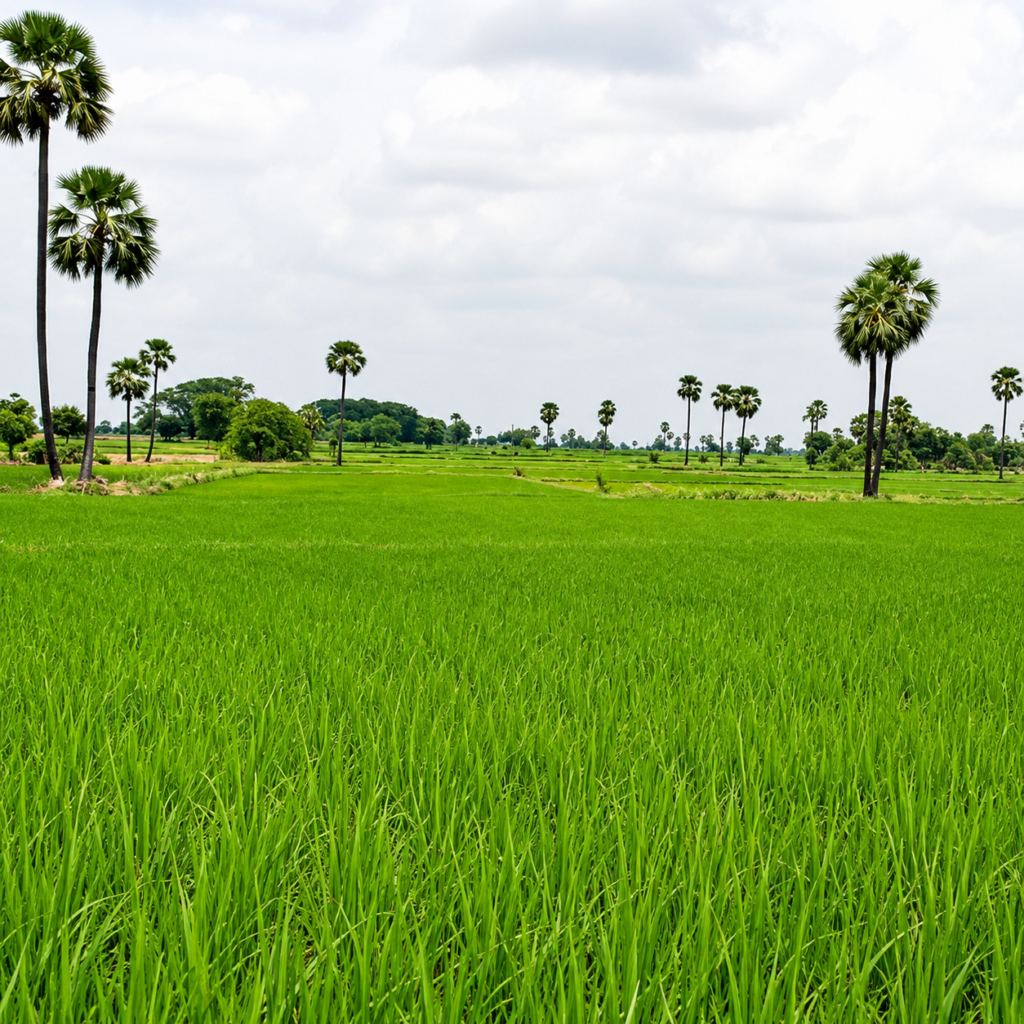
Paddy
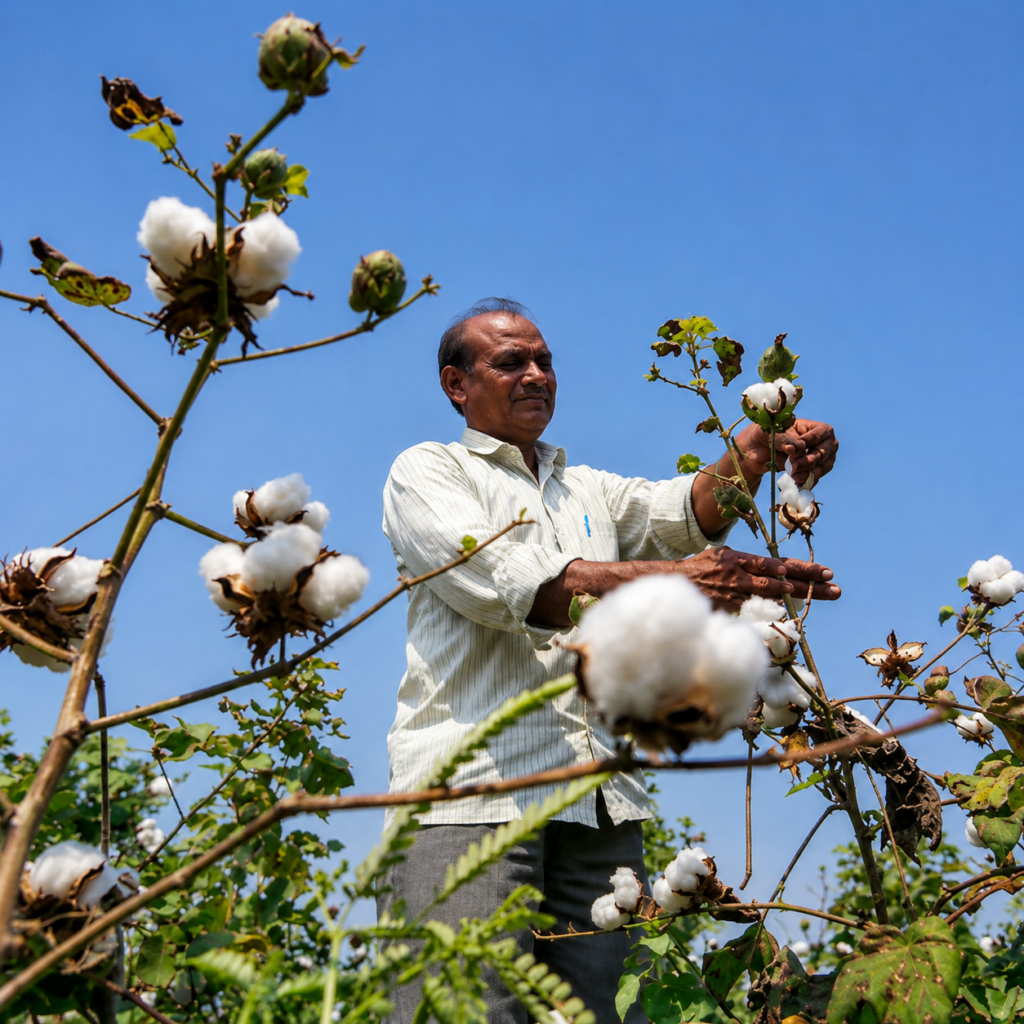
Cotton
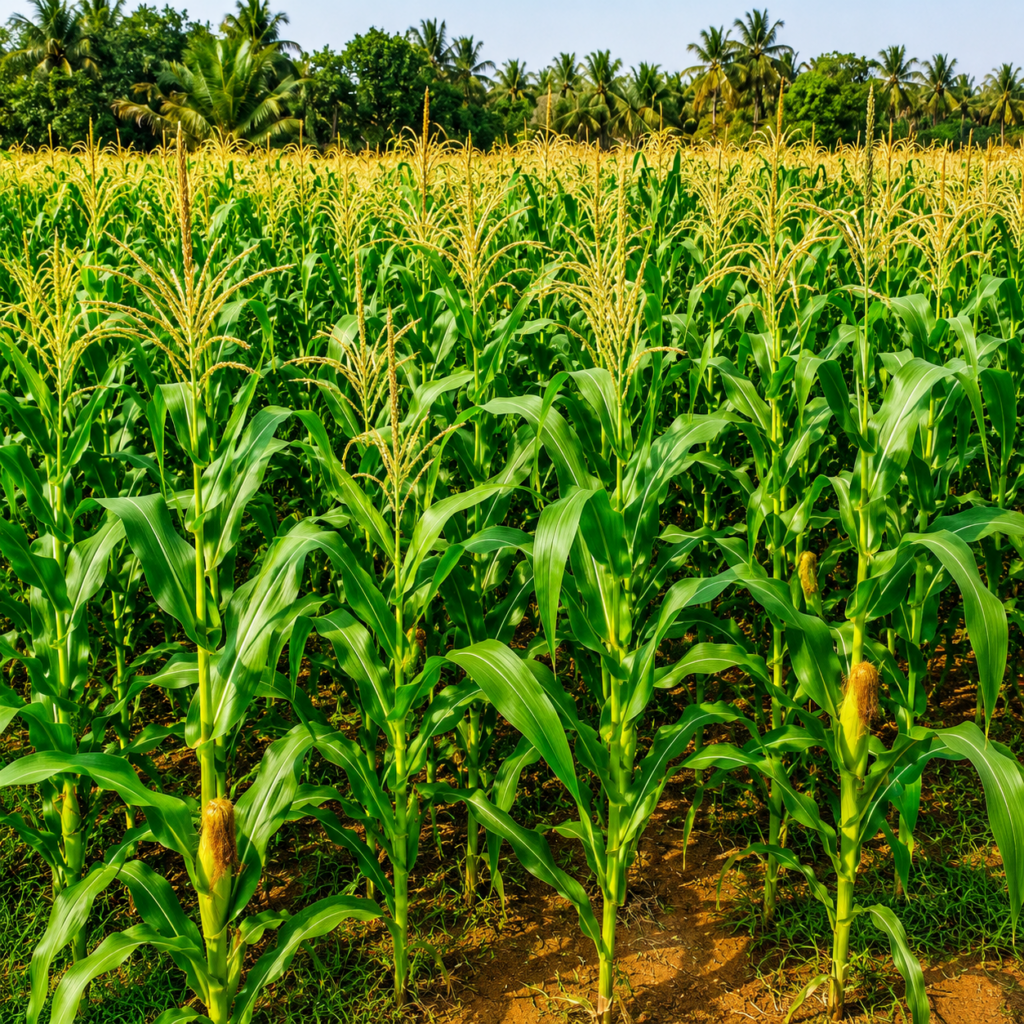
Maize(Corn)
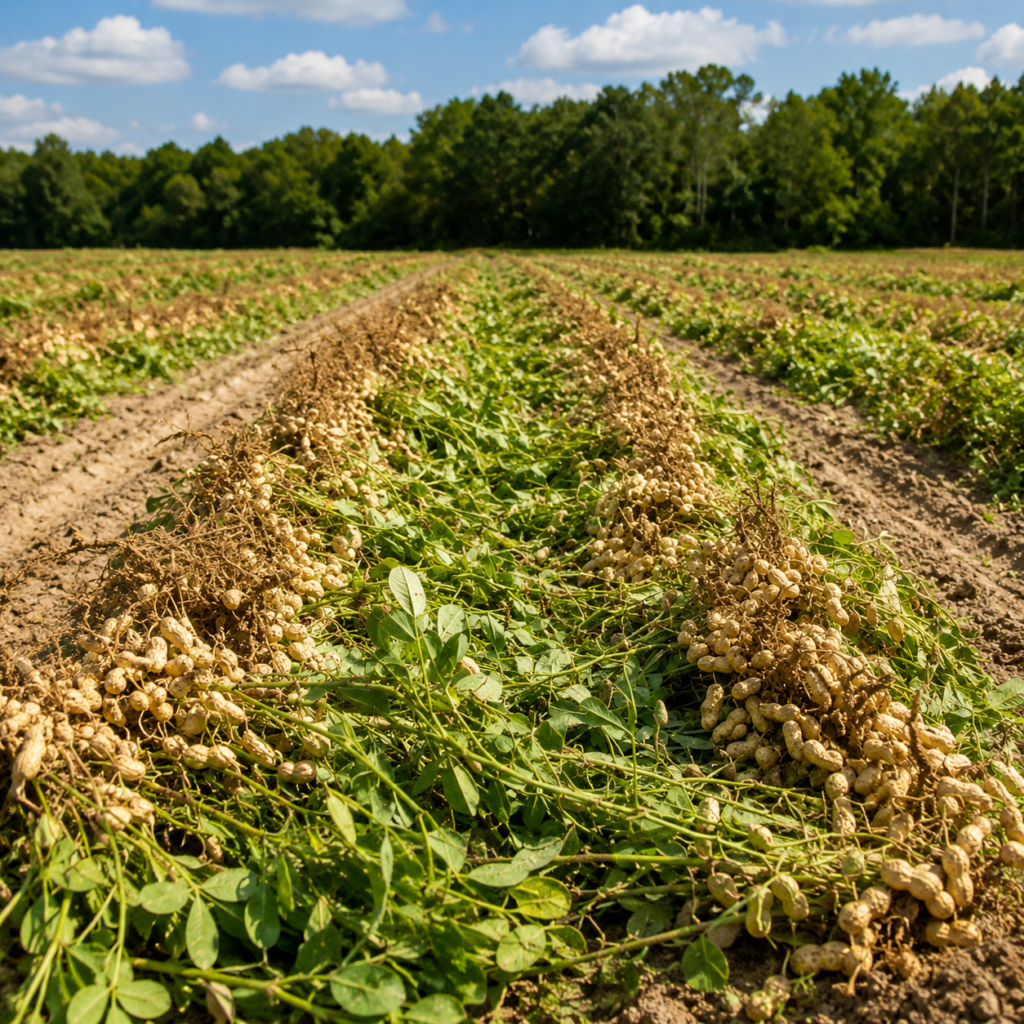
Groundnut
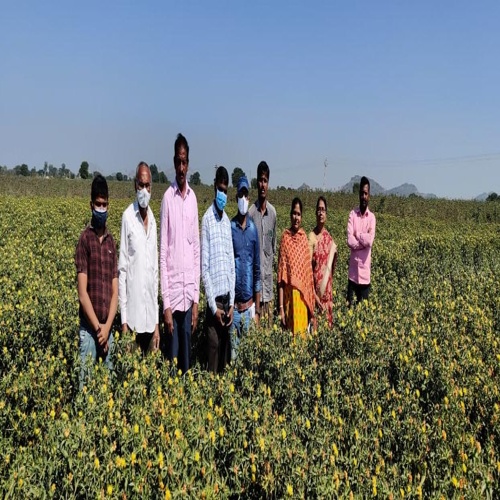
Pulses
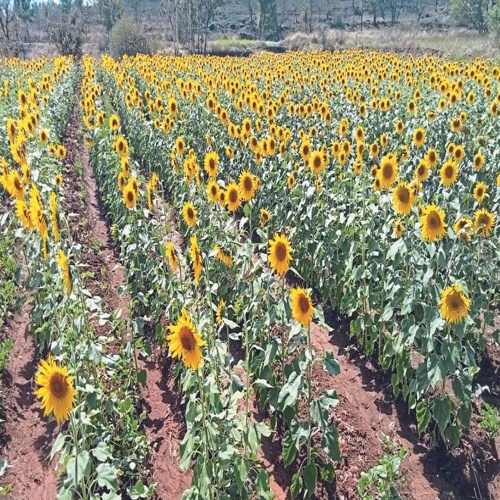
Sunflowers
Economic Strenths of Wanaprathy District
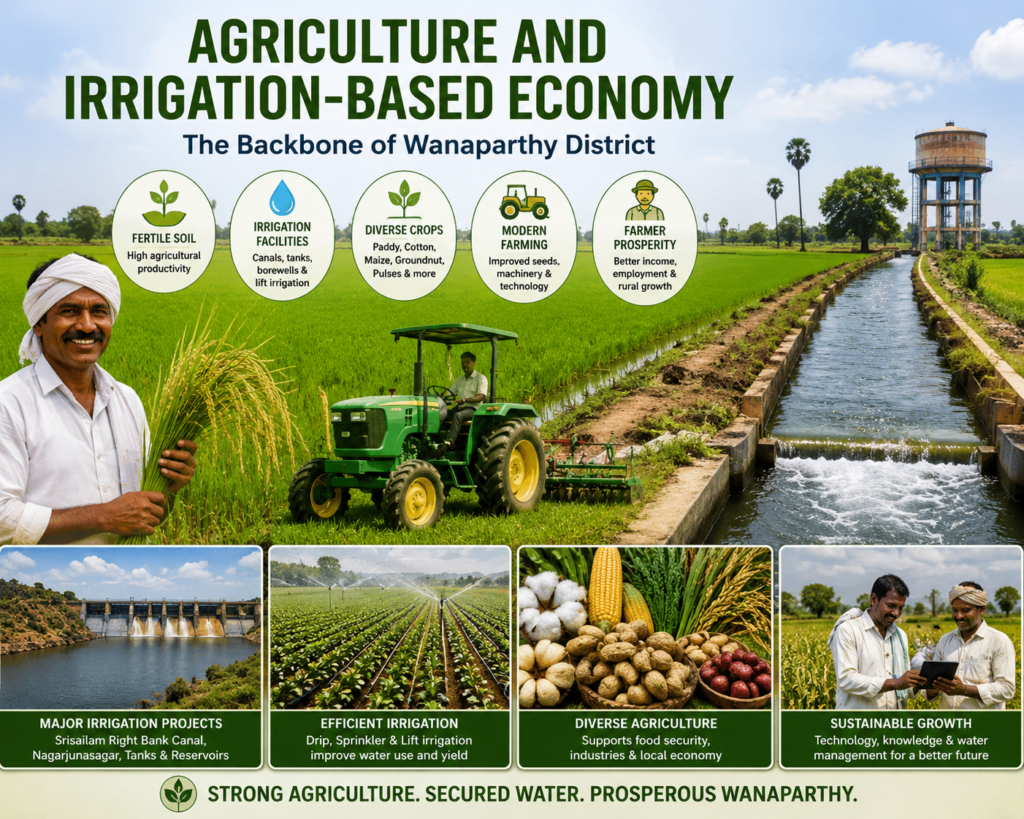
Agriculture is the backbone of Wanaparthy District’s economy, supporting the livelihoods of a majority of its population and contributing significantly to regional development. The district is blessed with fertile agricultural lands, favorable climatic conditions, and an extensive network of irrigation resources that enable farmers to cultivate a wide variety of crops throughout the year. Major crops grown in Wanaparthy include paddy, cotton, maize, groundnut, sunflower, pulses, and several horticultural crops, which play a vital role in ensuring food security and generating income for farming communities.
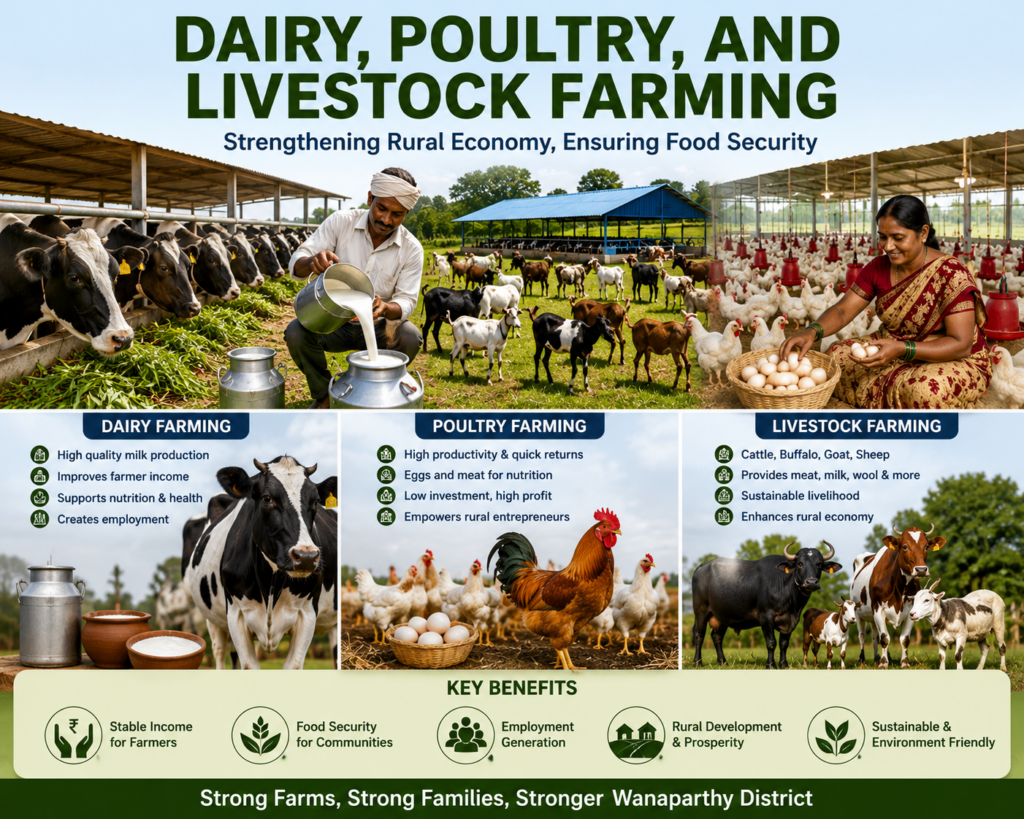
Dairy, poultry, and livestock farming are important pillars of the rural economy in Wanaparthy District, providing sustainable livelihoods and supporting agricultural development. Thousands of farming families depend on dairy production, poultry rearing, and animal husbandry as valuable sources of income alongside crop cultivation. These activities contribute significantly to food production, employment generation, and economic stability across the district’s rural communities.Government support programs, veterinary healthcare services, livestock development schemes, and modern farming practices have helped improve productivity and animal welfare across the district.
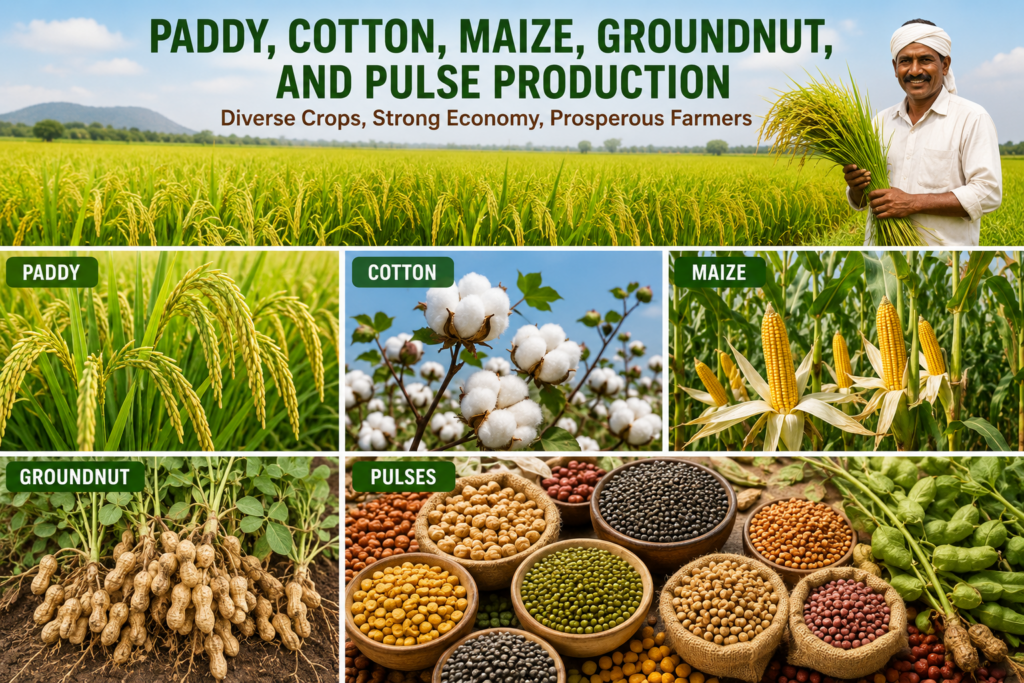
Agriculture is the foundation of Wanaparthy District’s economy, with the cultivation of paddy, cotton, maize, groundnut, and pulses playing a crucial role in supporting livelihoods and driving rural development. These crops are grown extensively across the district due to favorable soil conditions, irrigation facilities, and the dedication of the farming community. Together, they contribute significantly to food security, agricultural income, employment generation, and the overall economic growth of the region. The combined production of paddy, cotton, maize, groundnut, and pulses has made Wanaparthy District a significant agricultural region within Telangana.
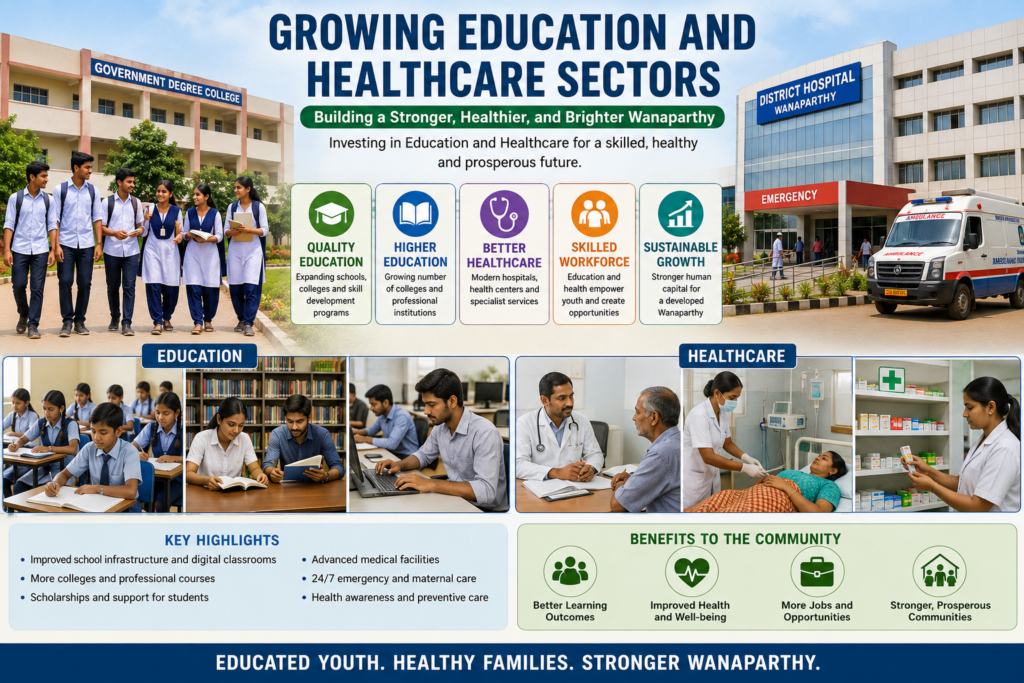
The education and healthcare sectors have emerged as key drivers of social and economic development in Wanaparthy District. Over the years, significant investments in educational institutions, healthcare facilities, and public infrastructure have improved the quality of life for residents and created new opportunities for growth and progress. These sectors not only enhance human development but also contribute to employment generation, skill development, and community well-being across the district.The expansion of education and healthcare sectors has created numerous employment opportunities for teachers, doctors, nurses, healthcare workers, administrative staff, and support professionals.
Culture and Festivals
Wanaparthy District is renowned for its rich cultural heritage, vibrant traditions, and colorful festivals that reflect the spirit, unity, and diversity of Telangana. The district’s cultural identity has been shaped by centuries of history, particularly during the era of the Wanaparthy Samsthanam, which played a significant role in promoting art, literature, architecture, and social development. Even today, the people of Wanaparthy proudly preserve their customs, folk traditions, religious beliefs, and cultural practices, passing them on from one generation to the next. The district is a beautiful blend of ancient heritage and modern values, making it one of the culturally significant regions of Telangana. Festivals in Wanaparthy are celebrated with immense enthusiasm, devotion, and community participation. Bathukamma, the floral festival of Telangana, is one of the most celebrated festivals in the district, where women create colorful flower arrangements, sing traditional songs, and perform cultural dances to honor Goddess Gauri. Bonalu, dedicated to Goddess Mahakali, is another major festival marked by grand processions, traditional rituals, folk performances, and devotional celebrations. Sankranti, the harvest festival, brings families together with colorful rangoli, kite flying, traditional games, and thanksgiving for a successful agricultural season. Festivals such as Ugadi, Sri Rama Navami, Vinayaka Chavithi, Dasara, Deepavali, Eid-ul-Fitr, Bakrid, and Christmas are also celebrated with great joy, reflecting the district’s communal harmony and respect for diverse cultures and religions.
Climate
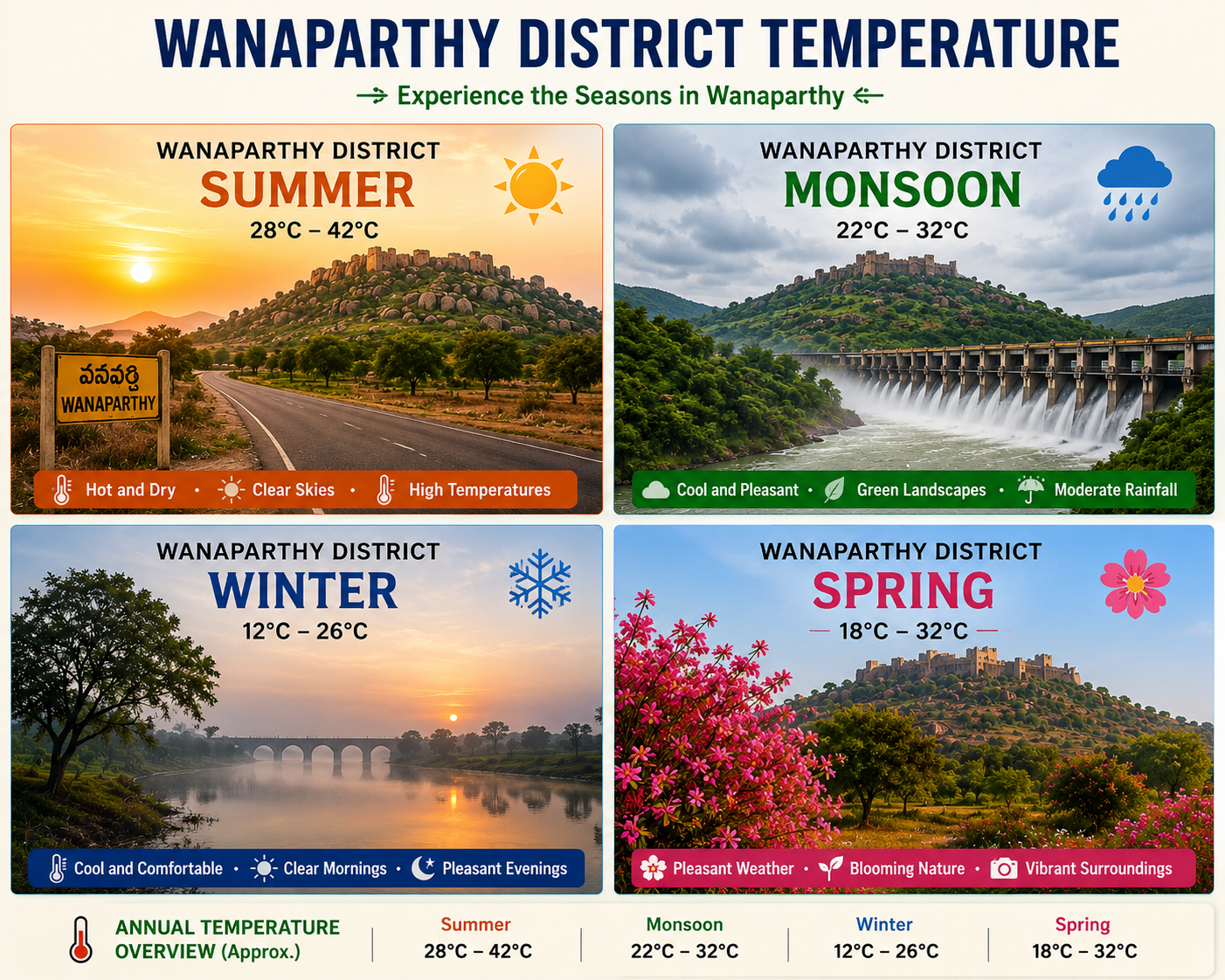
Wanaparthy District experiences a tropical semi-arid climate, with distinct summer, monsoon, winter, and spring seasons that significantly influence agriculture, water resources, and daily life. Summers, extending from March to June, are generally hot and dry, with temperatures ranging from 28°C to 42°C, occasionally reaching higher during peak months. The southwest monsoon, from June to September, brings moderate rainfall and pleasant temperatures between 22°C and 32°C, replenishing reservoirs, lakes, tanks, and groundwater while supporting the cultivation of major crops such as paddy, cotton, maize, groundnut, and pulses.
Winter, from November to February, offers cool and comfortable weather with temperatures ranging from 12°C to 26°C, making it the most favorable season for tourism, outdoor activities, and rabi crop cultivation. Spring, which occurs briefly between February and March, experiences temperatures of 18°C to 32°C and is marked by clear skies, blooming vegetation, and pleasant weather. The district receives most of its annual rainfall during the monsoon season, making effective irrigation and water conservation essential for sustainable agriculture. Overall, Wanaparthy enjoys an annual temperature range of approximately 12°C to 42°C, and its combination of fertile land, seasonal rainfall, abundant sunshine, and improving irrigation infrastructure makes it one of Telangana’s important agricultural districts while supporting steady economic growth, environmental sustainability, and the well-being of its residents.
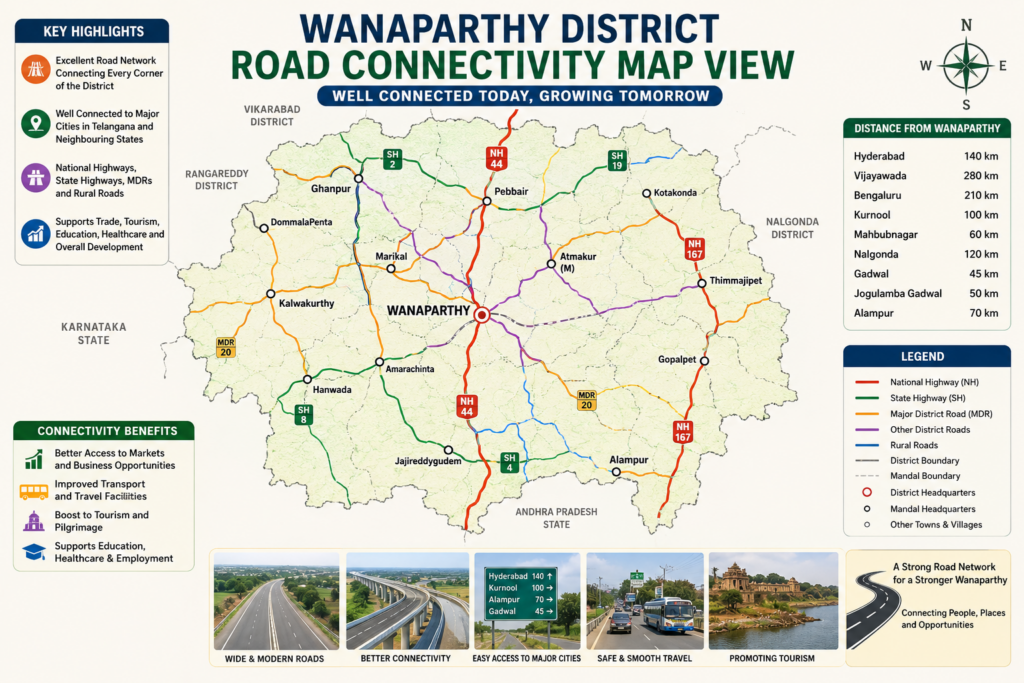
Wanaparthy Road Connectivity
| Destination | Approx. Distance (km) | Travel Time* |
|---|---|---|
| Hyderabad | 165 km | 3.5–4 hours |
| Mahabubnagar | 62 km | 1–1.5 hours |
| Jadcherla | 85 km | 1.5–2 hours |
| Kurnool (Andhra Pradesh) | 95 km | 2 hours |
| Gadwal | 58 km | 1–1.5 hours |
| Nagarkurnool | 52 km | 1 hour |
| Jogulamba (Alampur) | 75 km | 1.5 hours |
| Kalwakurthy | 48 km | 1 hour |
| Srisailam | 150 km | 3–3.5 hours |
| Hyderabad International Airport (RGIA) | 145 km | 3 hours |
| Bengaluru | 380 km | 7–8 hours |
| Vijayawada | 330 km | 6–7 hours |
Wanaparthy Railway Connectivity
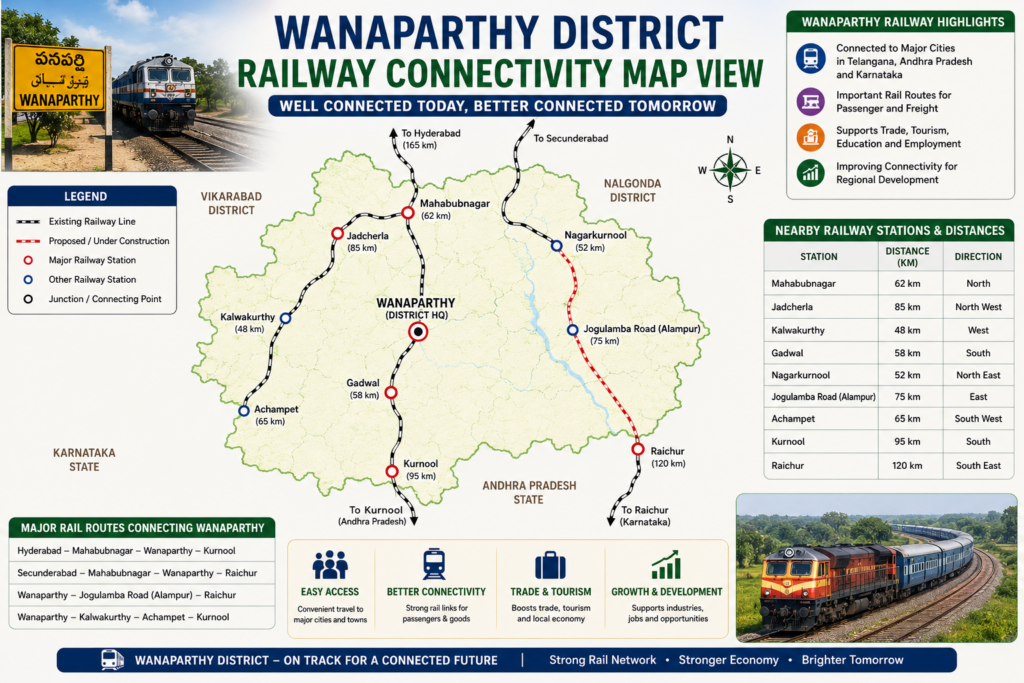
| Railway Station | Approx. Distance from Wanaparthy | Travel Time |
|---|---|---|
| Gadwal Junction | 42 km | 45–60 mins |
| Mahabubnagar Railway Station | 62 km | 1–1.5 hours |
| Kurnool City Railway Station | 95 km | 2 hours |
| Jadcherla Railway Station | 85 km | 1.5–2 hours |
| Raichur Junction (Karnataka) | 105 km | 2–2.5 hours |
| Secunderabad Junction | 165 km | 3.5–4 hours |
| Hyderabad Deccan (Nampally) | 170 km | 3.5–4 hours |
| Kacheguda Railway Station | 172 km | 3.5–4 hours |
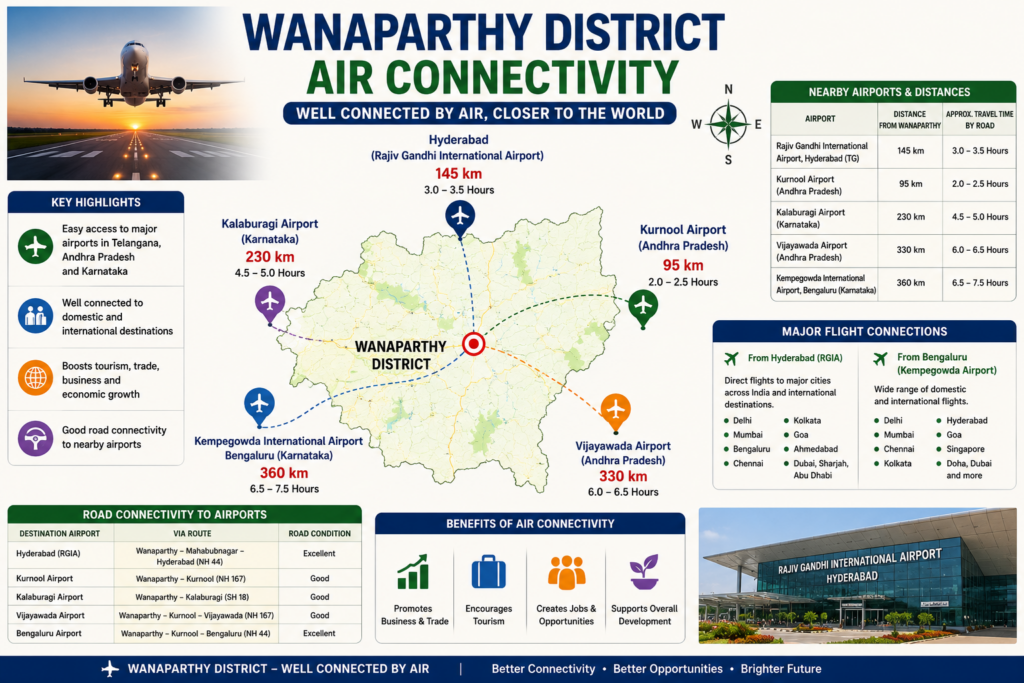
Wanaparthy Air Connectivity
| Airport | Approx. Distance from Wanaparthy | Travel Time |
|---|---|---|
| Rajiv Gandhi International Airport (Hyderabad) | 145 km | 3–3.5 hours |
| Kurnool Airport (Andhra Pradesh) | 95 km | 2–2.5 hours |
| Kalaburagi Airport (Karnataka) | 230 km | 4–4.5 hours |
| Vijayawada Airport (Andhra Pradesh) | 330 km | 6–6.5 hours |
| Kempegowda International Airport (Bengaluru) | 380 km | 7–8 hours |
Revenue Administration of Wanaparthy District
District Overview
Wanaparthy District is one of the 33 districts of Telangana State, formed during the administrative reorganization of districts on 11 October 2016. The district headquarters is Wanaparthy town, which has historically served as the capital of the former Wanaparthy Samsthanam. Located in the southern part of Telangana, the district is known for its rich cultural heritage, historic palaces, ancient temples, fertile agricultural lands, and rapidly developing infrastructure. Agriculture is the backbone of the district’s economy, supported by irrigation projects, reservoirs, and modern farming practices. With improving transportation, educational institutions, healthcare facilities, and tourism potential, Wanaparthy has emerged as an important district contributing to Telangana’s overall development.
Previous History of Wanaparthy
Wanaparthy has a glorious history dating back several centuries. During the medieval period, the region came under the rule of various dynasties including the Kakatiyas and later the Bahmani and Qutb Shahi kingdoms. It gained prominence under the Wanaparthy Samsthanam, one of the most influential princely estates in the Hyderabad State ruled by the Rameshwar Rao family. The rulers constructed the magnificent Wanaparthy Palace and actively promoted education, irrigation, literature, and public welfare. After India’s independence in 1947 and the integration of Hyderabad State in 1948, Wanaparthy became part of Mahabubnagar District. On 11 October 2016, the Government of Telangana officially formed Wanaparthy District to improve administrative efficiency and accelerate regional development. Today, the district successfully combines its historical legacy with modern infrastructure and economic progress.
District Statistics
| Particular | Details |
|---|---|
| State | Telangana |
| District Headquarters | Wanaparthy |
| Formation Date | 11 October 2016 |
| Area | 2,152 sq. km |
| Population (2011 Census) | 577,758 |
| Population Density | 268 persons/sq. km |
| Literacy Rate | 55.67% |
| Official Language | Telugu |
| Additional Languages | Urdu |
| Assembly Constituencies | 2 |
| Revenue Divisions | 1 |
| Mandals | 14 |
| Villages | Approximately 255 |
| Municipalities | 1 (Wanaparthy Municipality) |
Administrative Divisions
Wanaparthy District consists of 14 Mandals:
- Wanaparthy
- Pebbair
- Kothakota
- Atmakur
- Gopalpeta
- Amarchinta
- Madanapur
- Pangal
- Veepanagandla
- Revalli
- Srirangapur
- Ghanpur
- Chinnambavi
- Peddamandadi
District Measurements
| Measurement | Details |
|---|---|
| Total Geographical Area | 2,152 sq. km |
| Latitude | 16.36° N (Approx.) |
| Longitude | 78.06° E (Approx.) |
| Average Elevation | 404 meters (1,325 ft) above sea level |
| Climate Type | Tropical Semi-Arid |
| Average Annual Rainfall | 550–700 mm |
| Summer Temperature | 28°C – 42°C |
| Winter Temperature | 12°C – 26°C |
| Revenue Divisions | 1 |
| Mandals | 14 |
| Municipality | Wanaparthy Municipality |
| Villages | Approximately 255 |
| Population (2011 Census) | 577,758 |
| Population Density | 268 persons per sq. km |
| Literacy Rate | 55.67% |
| Official Language | Telugu |
| Vehicle Registration Code | TG-32 |
| Time Zone | IST (UTC +5:30) |
Measurements Overview (Paragraph)
Wanaparthy District covers a total geographical area of 2,152 square kilometers, making it one of the medium-sized districts in Telangana. Located at approximately 16.36° North latitude and 78.06° East longitude, the district lies at an average elevation of 404 meters above sea level. It experiences a tropical semi-arid climate, with temperatures ranging from 12°C during winter to 42°C in summer, while receiving an average annual rainfall of 550–700 mm. Administratively, the district consists of 1 Revenue Division, 14 Mandals, 1 Municipality, and approximately 255 villages. According to the 2011 Census, Wanaparthy has a population of 577,758, with a population density of 268 persons per square kilometer and a literacy rate of 55.67%. The district’s fertile agricultural lands, expanding infrastructure, and strategic location contribute significantly to its economic development and overall growth within Telangana.
Revenue Administration Statistics
| Particular | Details |
|---|---|
| Revenue Divisions | 1 |
| Revenue Mandals | 14 |
| Municipalities | 1 (Wanaparthy) |
| Villages | Approximately 255 |
| District Headquarters | Wanaparthy |
Revenue Overview
The Revenue Administration of Wanaparthy District plays a vital role in ensuring efficient governance and public service delivery. It manages land records, property registration, revenue collection, disaster management, implementation of welfare schemes, and coordination of development activities. Through its network of revenue offices and mandal administrations, the district ensures transparent administration, timely public services, and effective implementation of government policies, contributing to the overall development and welfare of the people of Wanaparthy District.
Education and Health care
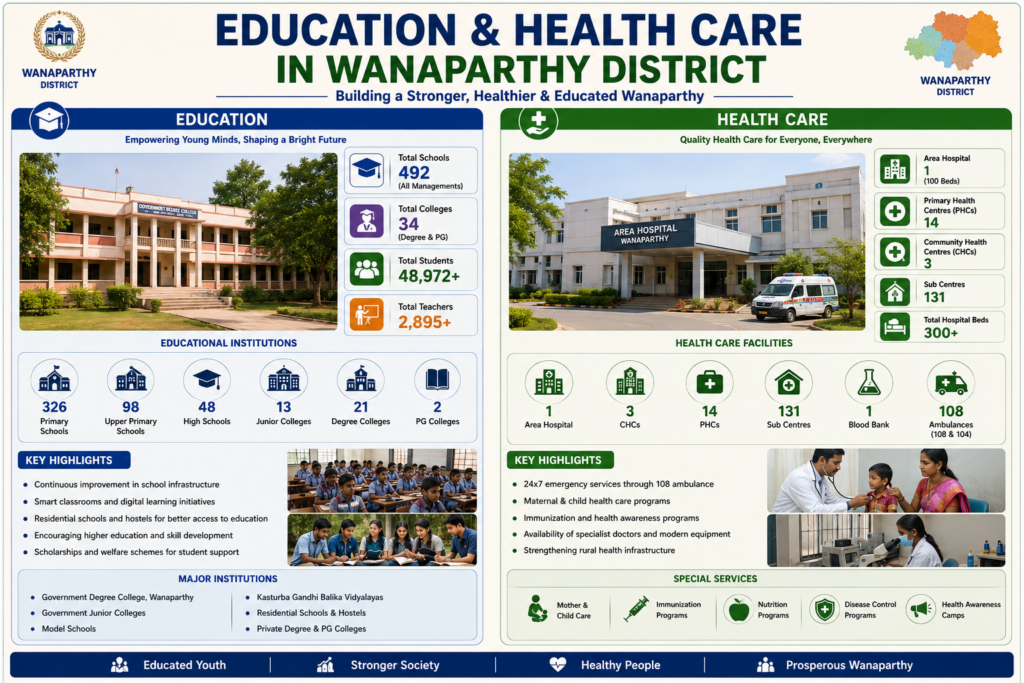
Education and healthcare are two of the most important pillars supporting the overall development of Wanaparthy District. Over the years, the district has witnessed significant improvements in educational infrastructure and healthcare services, contributing to better living standards, increased literacy, and improved public health. Government initiatives, private investments, and community participation have played a crucial role in expanding access to quality education and modern medical facilities across both urban and rural areas. These sectors continue to strengthen the district’s social and economic progress while creating opportunities for future generations. The growth of education and healthcare has also created numerous employment opportunities for teachers, lecturers, doctors, nurses, pharmacists, laboratory technicians, healthcare workers, and administrative staff. These sectors stimulate the local economy by encouraging investments in infrastructure, transportation, housing, retail businesses, and support services. Educational institutions and healthcare facilities also attract people from neighboring districts, further contributing to regional development. Today, Wanaparthy District continues to prioritize human development by investing in quality education and accessible healthcare. With continuous improvements in infrastructure, digital technologies, skilled professionals, and government support, the district is building a healthier, better educated, and more prosperous society.
Wanaparthy District
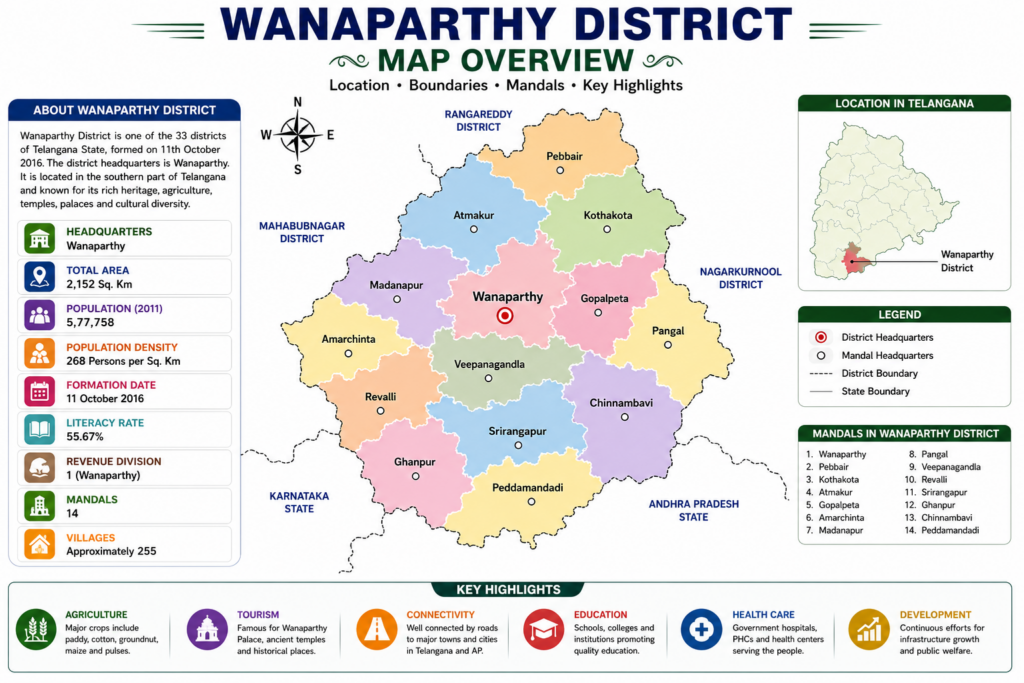
- Population: Approximately 5.78 Lakhs (2011 Census)
- Area: Approximately 2,152 sq. km
- Literacy Rate: Approximately 55.67%
- Altitude: Approximately 404 meters above sea level
- Population Density: Approximately 268 persons per sq. km
- Major River Basin: Krishna River Basin
- Main Occupation: Agriculture
- Major Crops: Paddy, Cotton, Maize, Groundnut, Pulses, Sunflower
- Famous Tourist Places: Wanaparthy Palace, Srirangapur Temple, Koilsagar Project, Gopalpet Reservoir, Sri Venkateswara Swamy Temple (Rajanagaram)
- Famous Festivals: Bathukamma, Bonalu, Sankranti, Ugadi, Dasara, Deepavali, Vinayaka Chavithi, Eid, Christmas
- Wanaparthy District is a rapidly developing district in southern Telangana, known for its rich history, agricultural economy, and cultural heritage. Covering an area of 2,152 sq. km, the district has a population of approximately 5.78 lakh with a literacy rate of 55.67%. Agriculture is the primary occupation, with paddy, cotton, maize, groundnut, pulses, and sunflower as the major crops.